
What Documents Are Needed to Start ABA Therapy?
Starting ABA therapy shouldn’t feel confusing—but for many families, it does. A big reason is missing or unclear documentation. Let’s be direct about what’s typically required so you can move forward without delays. The Short List (What You Actually Need) In most cases, four core documents are required to start ABA therapy:

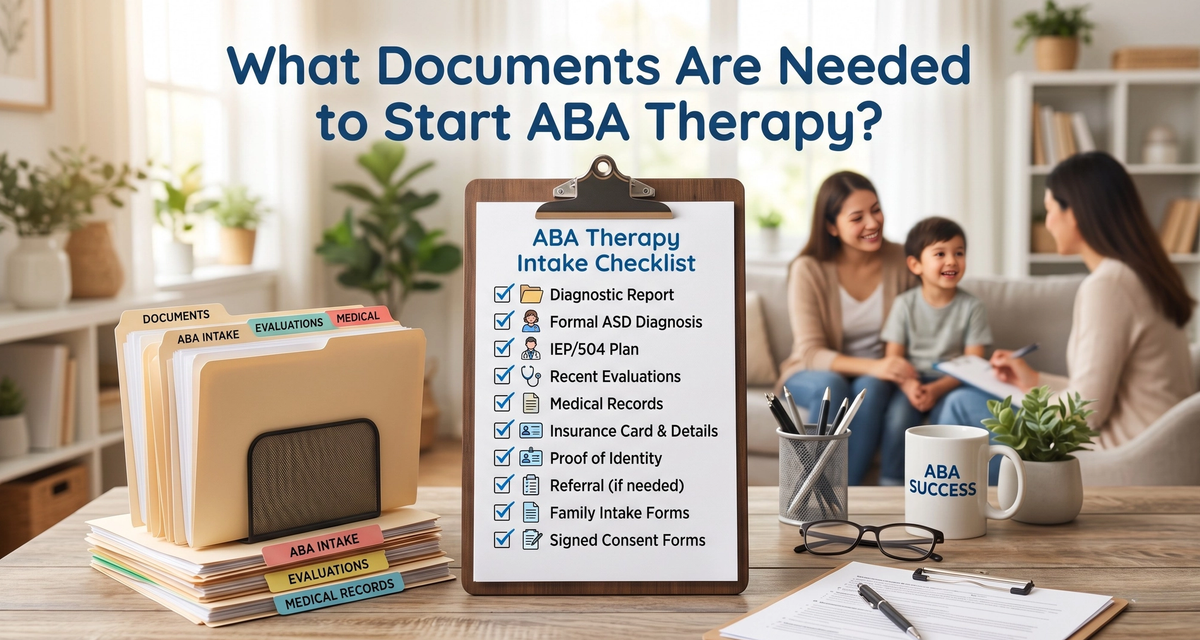
Starting ABA therapy shouldn’t feel confusing—but for many families, it does. A big reason is missing or unclear documentation. Let’s be direct about what’s typically required so you can move forward without delays.
The Short List (What You Actually Need)
In most cases, four core documents are required to start ABA therapy:
- Referral
- Letter of Medical Necessity
- CDE (Comprehensive Diagnostic Evaluation)
- Insurance Card
If even one of these is missing or incomplete, services are often delayed or denied.
1. Referral
A referral is usually required by insurance to open the door.
It typically comes from:
- A pediatrician
- A developmental pediatrician
- A neurologist
- A psychologist or qualified diagnosing provider
The referral confirms:
- The child is being referred for ABA therapy
- The diagnosis or suspected diagnosis
- That ABA is medically appropriate to pursue
Some plans waive referrals—but many do not, especially HMOs.
2. Letter of Medical Necessity (LMN)
This is one of the most important documents—and one of the most misunderstood.
A Letter of Medical Necessity explains:
- Why ABA therapy is needed
- How the child’s diagnosis impacts daily functioning
- Why ABA is medically necessary (not optional or educational)
- The expected benefit of treatment
It is usually written by:
- The diagnosing provider
- A physician
- Sometimes the ABA provider’s clinical director (depending on insurance rules)
No LMN = weak or denied authorization.
3. Comprehensive Diagnostic Evaluation (CDE)
This is the foundation.
A CDE:
- Confirms a formal diagnosis (such as Autism Spectrum Disorder)
- Includes clinical observations and standardized testing
- Is required by most insurers to approve ABA
- Must be recent and completed by a qualified, licensed provider
Without a valid CDE, many ABA companies cannot even submit an authorization request.
4. Insurance Card
Simple—but critical.
The ABA provider needs:
- Front and back of the insurance card
- Correct member ID and group number
- Accurate policyholder information
Errors here cause:
- Eligibility issues
- Delayed benefits checks
- Denials before the process even starts
Always double-check this step.
Documents That Help (But Aren’t Always Required)
Depending on the situation, providers may also request:
- School evaluations or IEPs
- Speech or OT evaluations
- Prior therapy reports
Helpful—but they do not replace the four core documents.
Why Missing Documents Cause Delays
Insurance will not “figure it out later.”
If paperwork is missing:
- Authorizations stall
- Requests get denied as “incomplete”
- Appeals become harder
- Families wait months unnecessarily
Most delays are administrative, not clinical.
The Bottom Line
To start ABA therapy smoothly, you almost always need:
- ✅ Referral
- ✅ Letter of Medical Necessity
- ✅ Comprehensive Diagnostic Evaluation (CDE)
- ✅ Insurance Card
Getting these organized early saves time, stress, and missed therapy opportunities.
If you’re stuck waiting, ask which document is missing and who can provide it. In many cases, there’s a faster, valid way forward.
Early access matters—and paperwork shouldn’t be the reason a child has to wait.